


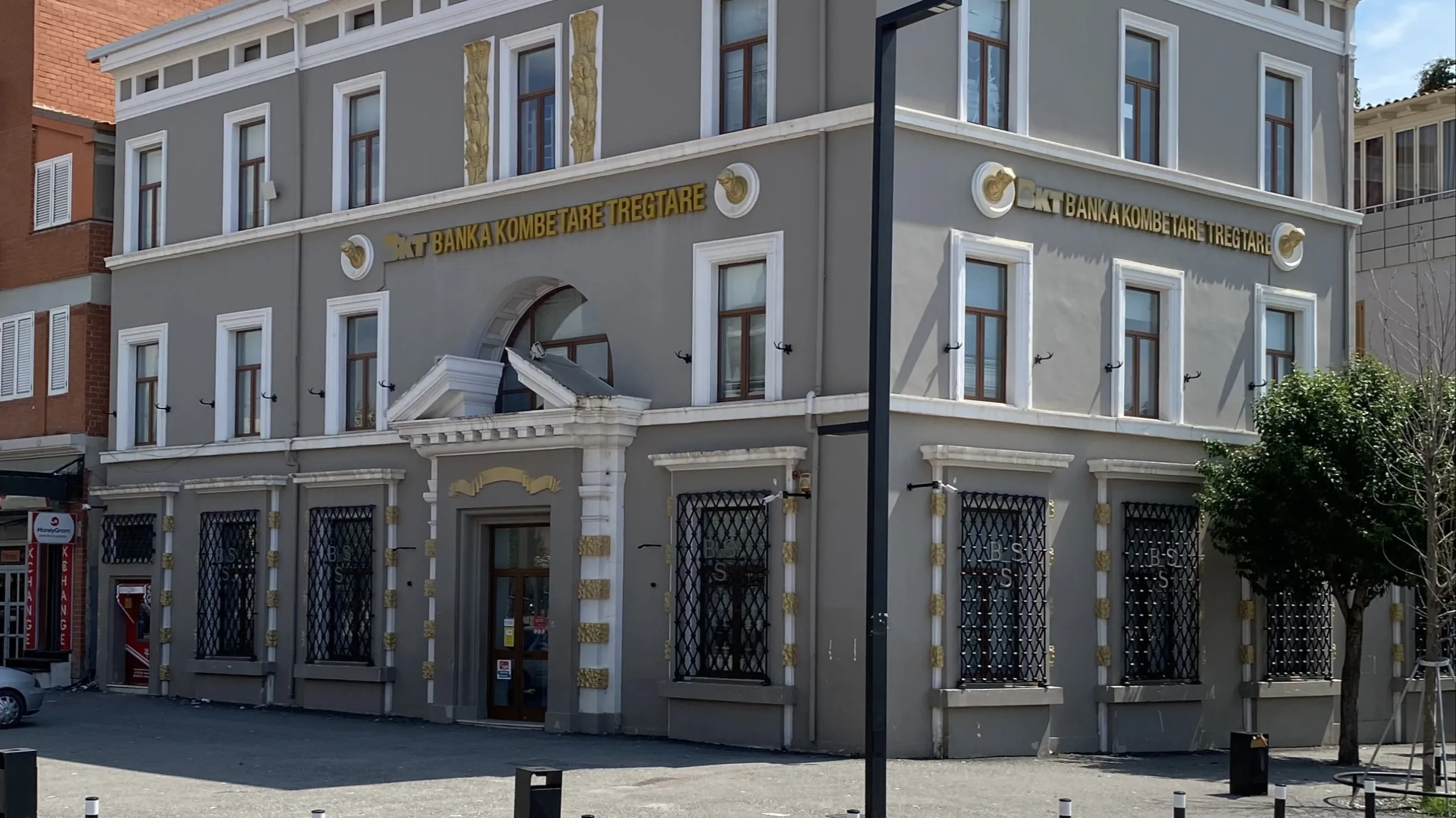
The Albanian banking sector is going through a period of growth, supported by healthier financial balances and a developing economy, which are encouraging the expansion of lending and maintaining stable levels of profitability.
This development represents an important turning point compared to a decade ago, when the high level of non-performing loans weighed heavily on the banking sector.
The challenge for most banks now is to expand access to credit in more segments of the economy, where informality remains widespread, without jeopardizing the progress made so far.
“The Albanian banking sector remains fundamentally strong, supported by healthy capitalization, ample liquidity, and historically low levels of non-performing loans,” says Fatih Karli, Deputy Executive Director of the National Commercial Bank (BKT), the largest bank in the country by assets.
Data from the Bank of Albania show the financial stability of the sector. In June 2026, the capital adequacy ratio was 19.7%, return on equity (ROE) 12%, while the loan-to-deposit ratio was 52.4%.
The improvement in asset quality has been particularly evident. According to the Bank of Albania, non-performing loans fell from 18.2% of total loans at the end of 2016 to 3.7% in June 2026.
This positive change reflects the coordinated efforts of the Albanian authorities to address the inherited problem of bad loans, including strengthening rules for writing off loans from balance sheets, reforming insolvency procedures, and improving credit information reporting.
“Our stress tests for solvency show that the banking sector can withstand even quite unfavorable macroeconomic scenarios,” says Holta Zaçaj, First Deputy Governor of the Bank of Albania.
Increasing lending
A stronger financial position is helping banks expand their lending activities. According to the Bank of Albania, credit to the private sector grew by 14.3% year-on-year during the first half of 2026.
The S&P Global Ratings agency expects credit expansion to remain strong, forecasting growth of 11–12% for the banking sector during the next year. Meanwhile, lending to individuals is projected to grow by 15–20%.
“We are seeing strong credit growth, supported by favorable macroeconomic conditions, high tourism activity, continuous construction development, and steady demand from families,” says Karli from BKT.
BKT also expects increased demand for financing in green energy, infrastructure, and public-private partnerships, especially as Albania progresses toward European Union membership.
The modernization of agriculture represents another opportunity to expand business lending.

According to Bledar Shella, CEO of OTP Bank Albania, the bank expects an increase in demand for financing machinery, irrigation systems, storage, and processing plants, while producers strive to meet European Union export standards.
Beyond corporate lending, the individual loan market also offers other opportunities for expansion.
“The Albanian consumer credit market is shifting from a market with a relatively low level of lending towards a more developed financing environment for individuals,” says Shella.
OTP Bank reports strong growth in lending to individuals, supported by rising demand for mortgage and consumer loans. The bank is also investing in digital services to attract new customers and expand its product range.
However, Shella draws attention to the need to exercise caution in lending.
“As demand for credit increases, maintaining discipline remains essential,” he says.
EBRD intervenes to support small businesses
While household lending continues to grow rapidly, access to financing remains unequal in other segments of the economy. This is especially evident among small Albanian businesses.
“The main obstacle is no longer the stability of the banking sector, but the limited scope and unequal distribution of financing,” says Hannes Takacs, head of the European Bank for Reconstruction and Development (EBRD) in Albania.
In July, the EBRD agreed to offer a guarantee of up to 25 million euros to ProCredit Bank Albania, covering half of the credit risk for a portfolio of up to 50 million euros of new loans to small and medium-sized enterprises.
Supported by the European Union, this scheme aims to expand access to financing for businesses with fewer credit opportunities, especially those outside Tirana and in sectors such as agribusiness and tourism.
However, the funding gap reflects a broader challenge for the Albanian banking sector, where the level of lending relative to the economy remains relatively low compared to countries in the region.
According to Raiffeisen Research, credit to the private sector in Albania represents about 35% of GDP, compared to 45–55% in other Western Balkan economies.
“Part of this gap represents a long-term opportunity to reach the levels of other countries, while another part is related to structural problems,” says Gunter Deuber, managing director, chief economist, and leader of Raiffeisen Research.
This differentiation indicates that Albanian banks still have considerable room for expansion. However, narrowing the gap requires more businesses to operate within the formal economy, maintain reliable financial statements, and increase the involvement of citizens and businesses in the banking system.
“The depth of lending cannot approach European Union levels faster than the formalization of the economy advances,” says Deuber.
The challenge of the real estate market
These issues reflect the challenges faced by Albanian banks.
Karli from BKT identifies the scale of the informal economy and the lack of audited financial statements among businesses as significant obstacles to assessing repayment capacity and expanding lending.
While many small businesses find it difficult to secure financing, the rapid growth of lending in other market segments, especially in real estate, presents another challenge.
Karim Kroll, an analyst for European financial institutions at S&P Global Ratings, draws attention to “the sharp rise in residential real estate prices over recent years, which has been accompanied by the rapid expansion of housing lending.”
According to S&P, housing prices in Albania rose by 60% in real terms between December 2022 and December 2025, thus excluding the effect of inflation.
The Bank of Albania has responded by setting limits on the ratio between the loan amount and the value of the property serving as collateral (LTV), as well as on the ratio between loan installments and the borrower’s income (DSTI).
Zaçaj says that “banks are constantly required to test their resilience against potential risks and to strengthen their capital position.”
Meanwhile, the process of joining the European Union is also driving reforms in the regulatory framework of the Albanian banking sector.
The Bank of Albania has drafted a new bill for credit institutions, aiming to align the prudential supervision framework with EU standards. This process will be followed by further rules on capital, liquidity, and risk management.
The new requirements for covering operational and cyber risks have already been approved.
According to the International Monetary Fund, the Bank of Albania also expects to complete alignment with the International Financial Reporting Standard IFRS 9 by early 2027, which will eliminate double reporting.
The credibility of the Albanian banking sector is increasing
The Albanian banking sector is also beginning to establish a presence in international debt markets.
In April, BKT secured 150 million euros through the first international issuance of senior unsecured bonds by a private sector company in Albania.
The transaction, organized by Morgan Stanley, diversifies the bank’s funding sources and supports compliance with regulatory requirements for loss-absorbing capacity.
Karli describes the issuance as “a strong confirmation” of BKT’s financial position and of “an increase in the credibility of the Albanian banking sector.”
According to him, this transaction has also created “a clearer path and a precedent in the market,” making it easier for banks and other Albanian companies to secure financing through debt instruments in international markets and to diversify their sources of financing./Adapted from The Banker, ekofin.al
