


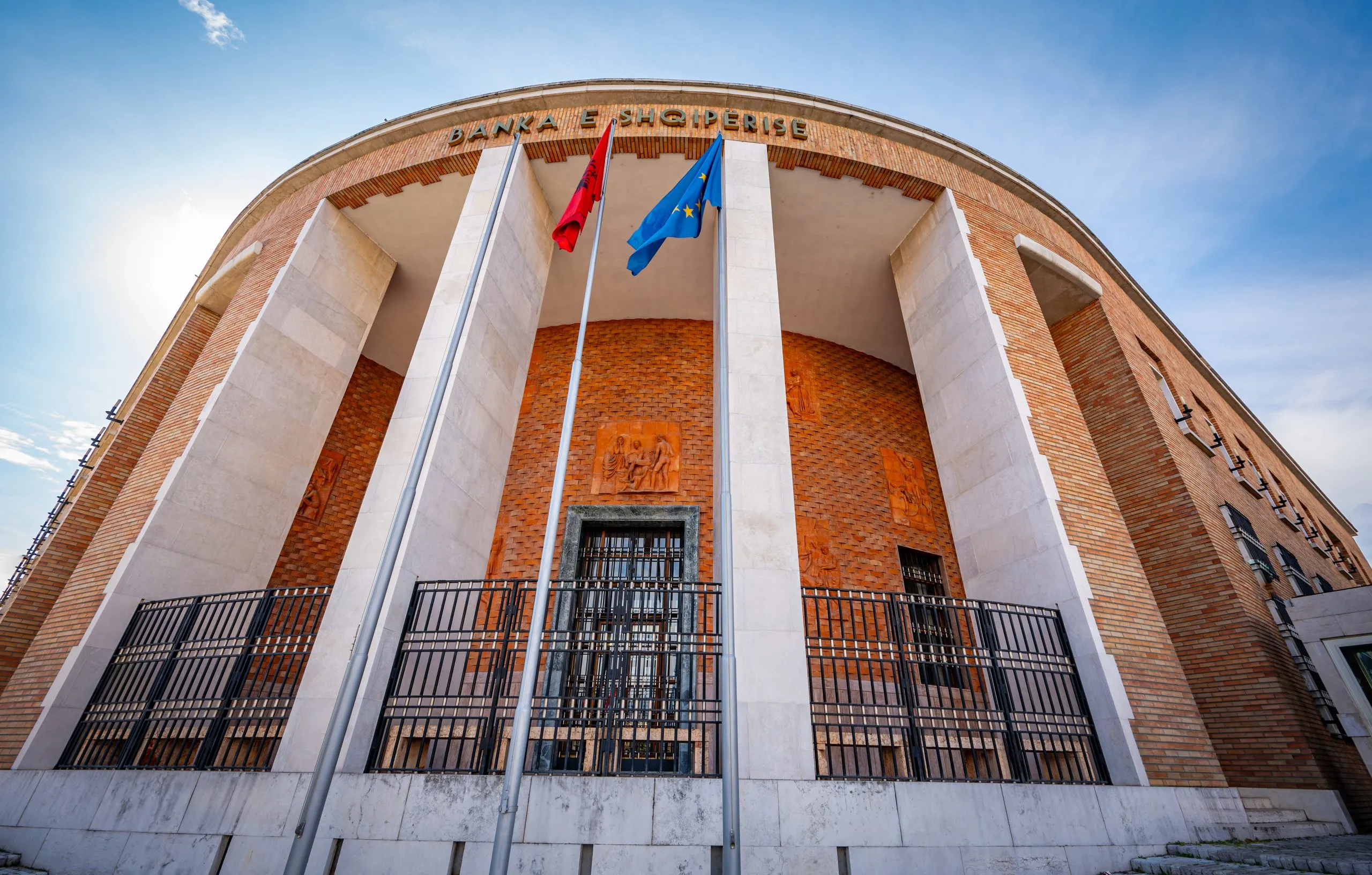
The recent social tensions in Albania may negatively affect the course of the economy, increasing uncertainty and leading to a reduction in consumption, investment, and tourism revenues. The warning comes from the Bank of Albania, which, in its latest monetary policy decision, highlights the increased risks to economic growth, while the effects of the new fiscal package on prices remain unclear. Under these conditions, the Supervisory Council decided to keep the base interest rate unchanged at 2.5%.
At the meeting held on November 3, 2026, the Supervisory Council of the Bank of Albania reviewed and approved the Quarterly Monetary Policy Report, assessing economic and financial developments as well as the outlook of the Albanian economy for the coming months and years.
Despite the positive performance of economic activity during the first three quarters of the year, the central bank notes that uncertainties have increased and that risks to economic growth have shifted to the negative side.
In particular, the Bank of Albania mentions recent social tensions as a factor that could directly influence the behavior of consumers and investors, as well as the tourism sector, which has become one of the main sources of economic growth and the inflow of foreign currency into the country.
According to the central bank’s assessment, “recent social tensions may be reflected in increased uncertainty and a reduction in consumption, investment, and tourism revenues.”
This is an important signal for the economy, as for the first time in this round of forecasts, social tensions are explicitly identified as one of the risks that could undermine the economic outlook.
Consumption, investment, and tourism, the three sectors that could be affected
The warning from the Bank of Albania takes on particular importance given the structure of the country’s economic growth.
During the first half of 2026, the Albanian economy grew by 3.6%, mainly supported by the expansion of consumption, investments, and exports of tourism services.
According to the central bank, the main contributors to economic growth continue to come from the services and construction sectors.
In this context, an increase in uncertainty caused by social tensions could influence consumer spending decisions and businesses’ decisions about new investments.
On the other hand, tourism remains particularly sensitive to the perception of security and stability in the country. A deterioration in this perception could affect the demand for tourism services and the income the economy earns from foreign visitors.
The Bank of Albania does not provide a concrete calculation of the potential economic damage from social tensions, but their inclusion in the risk analysis shows that recent developments are considered a factor that needs to be monitored.
The new fiscal package also creates uncertainty about prices
Alongside social tensions, the Bank of Albania also highlights another uncertainty factor for the economy: the impact of the new fiscal package on inflation.
In its statement, the central bank emphasizes that the effects of the fiscal package on prices remain to be assessed going forward.
This assessment comes at a time when the fiscal package for 2027 foresees changes in several taxes and tax rates, which may affect business costs and consumer prices.
The Bank of Albania assesses that the balance of risks leans upward for inflation and downward for economic growth.
This means that the economy simultaneously faces the possibility of slower growth and higher inflation than baseline forecasts.
Inflation may rise above target, with a return to 3% expected in 2028.
Average inflation in Albania reached 3.2% during the third quarter of 2026, up from 3% in the second quarter.
The increase was mainly influenced by the rising costs of fuels and some unprocessed food products, as a result of strengthening inflationary pressures in international markets.
However, within the quarter, annual inflation fell from 3.4% in July to 2.9% in September, mainly due to the slowdown in rent inflation.
According to the Bank of Albania, the overvaluation of the lek has helped cushion part of the impact of import prices.
Forecasts indicate that inflation could easily rise above the 3% target in the coming quarters before returning to this level during 2028.
The Bank of Albania maintains the base rate at 2.5%
Amid increased uncertainties, the Supervisory Council decided not to change the interest rates.
The base rate remains at 2.5%, the one-day deposit interest rate is at 1.5%, while the one-day loan interest rate is at 3.5%.
According to the central bank, this stance offers the most appropriate balance between the need to maintain favorable financing conditions and the risks related to the inflation trend.
Meanwhile, lending to the economy continues to grow at a high pace. In the third quarter, the annual credit growth reached 15.5%, mainly supported by lending in lek, financing business investments, and home purchases by individuals.
The labor market has also continued to show positive performance, with employment in the non-agricultural private sector increasing by 2.3% and nominal wages rising by 11.6% during the second quarter.
However, the Bank of Albania emphasizes that the economic outlook has become more uncertain due to the combination of international inflationary pressures, social tensions, and still unassessed impacts of new fiscal policies.
For this reason, future monetary policy decisions will depend on economic and financial developments, as well as on the intensity of risks that could threaten price stability.
The warning about social tensions represents one of the most significant elements of the Bank of Albania’s latest assessment: beyond the direct costs of unrest, the uncertainty it creates could influence the decisions of families, businesses, and tourists, endangering three of the main engines of the country’s economic growth. /ekofin.al
