


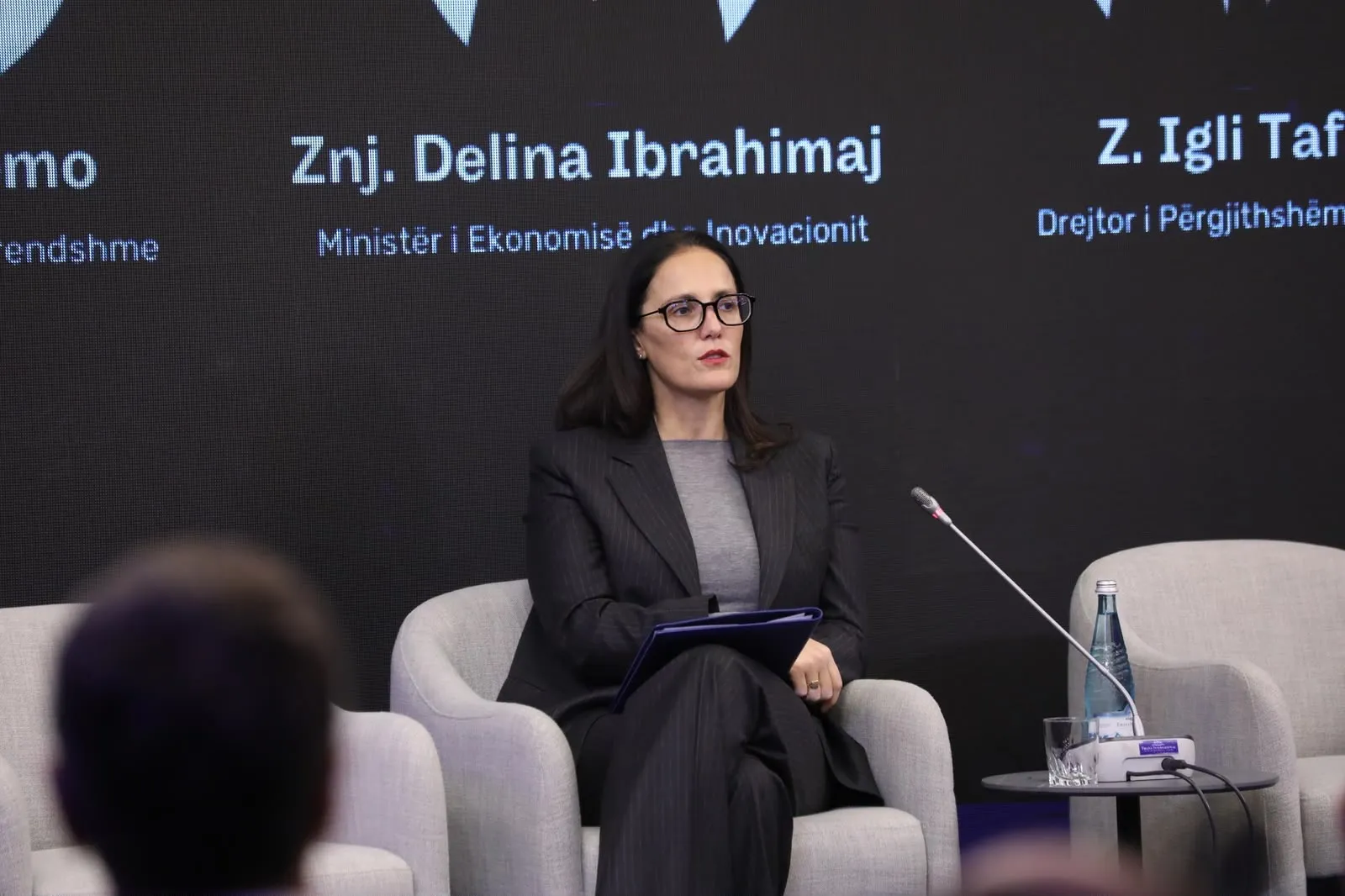
Cybersecurity is becoming a sector with growing potential for the Albanian economy, while the expansion of digital services is creating new needs for protecting systems, data, and financial transactions. Currently, 72 businesses operate in Albania primarily focused on cybersecurity, of which 28 were registered just during the past year. Meanwhile, six startups in this sector have received funding to develop their activities.
The data was made public by the Minister of Economy and Innovation, Delina Ibrahimaj, during the National Conference on Cybersecurity, themed “The Landscape of Threats Today,” which was also attended by the United States Ambassador to Albania, Eric Wendt.
According to the minister, the increase in the number of businesses offering cybersecurity services demonstrates the development of a new market, which is expected to play an increasingly important role in protecting the economy and digital infrastructures.
Out of 72 businesses operating in this field, 28 were registered during the past year, representing about 39% of the current number of entities in the sector. This indicates an increased interest from businesses to invest in services related to the protection of IT systems and data security.
Ibrahimaj emphasized that the state has the responsibility to create standards, draft legislation, and monitor their implementation, but the private sector must take a greater role in providing specialized services.
“The public can guarantee standards, draft legislation, monitor these standards, but cannot be the service provider for all the needs the market has at this moment,” the minister stated.
In this context, supporting startups and innovative enterprises is seen as an instrument for developing a domestic cybersecurity industry, which can serve public institutions, banks, businesses, and critical infrastructure operators.

The 2022 cyberattack, a turning point for security investments
Referring to developments in recent years, Ibrahimaj emphasized that the 2022 cyberattack marked a turning point in the Albanian government’s approach to protecting digital systems.
According to her, after this attack, cybersecurity was placed among the institutional priorities, accompanied by an increase in human, financial, and regulatory capacities.
“From that moment on, of course, cybersecurity became a priority for us. Now the Authority has grown in number, increased funding, has approved legislation, is drafting the development strategy, and sectoral CERTs have been established and are being established,” Ibrahimaj declared.
The creation and expansion of sectoral structures for responding to cyber incidents aims to strengthen capabilities for identifying, preventing, and managing attacks that may affect public services and critical infrastructures.
Businesses need to invest in protection against cyberattacks.
An important part of the minister’s message was addressed to the private sector, which is increasingly using technology to manage activities, make payments, and store information.
Ibrahimaj warned that cyberattacks could cause significant economic consequences for businesses, including interruption of activity, inability to conduct transactions, and data breaches.
“It is our duty to inform the private sector, which uses digital services to make payments and store data, how important it is to invest in preventing cyberattacks, which can even paralyze their businesses in many areas of the economy,” the minister emphasized.
In this context, cybersecurity is no longer seen merely as a technological issue, but also as an important element in risk management and ensuring the continuity of economic activity.
For businesses, investments in digital protection can reduce the risk of financial losses, service interruptions, and damage to customer trust.
Cybersecurity will be included in educational curricula
In addition to investments in infrastructure and technology, another priority is the training of specialized human resources.
Ibrahimaj announced that, in cooperation with the Ministry of Education, curricula have been developed aiming to integrate cybersecurity into the basic education system.
Meanwhile, vocational education and short-term training courses are expected to contribute to the preparation of new specialists for this sector.
This approach aims to create a broader base of professionals, given that the development of new technologies and the expansion of artificial intelligence use are increasing the need for specialized skills in protecting IT systems.
The development of human capital is also considered an opportunity to increase employment in the technology sector and to create value-added services, which can also be offered in international markets.
Ibrahimaj: Albania is no longer a weak link in regional security
Speaking about Albania’s position in the region, the minister assessed that the high level of digitalization of public services and the experience gained in facing cyber threats have created opportunities for the country to play a more active role in regional security.
“I believe that Albania, with the large number of digital services offered and the high level of digitalization of the public sector, is a case that can serve as a success story for all countries in the region. We are a reliable partner and no longer, as a few years ago, a weak link, but I believe we are an important link in the regional security chain,” Ibrahimaj declared.
According to the minister, the capacities built in recent years can serve not only to protect national infrastructure but also to strengthen cooperation with the countries of the region.
From an economic perspective, the development of the cybersecurity sector creates opportunities for new enterprises, qualified employment, and the expansion of the technology services market. /ekofin.al
