


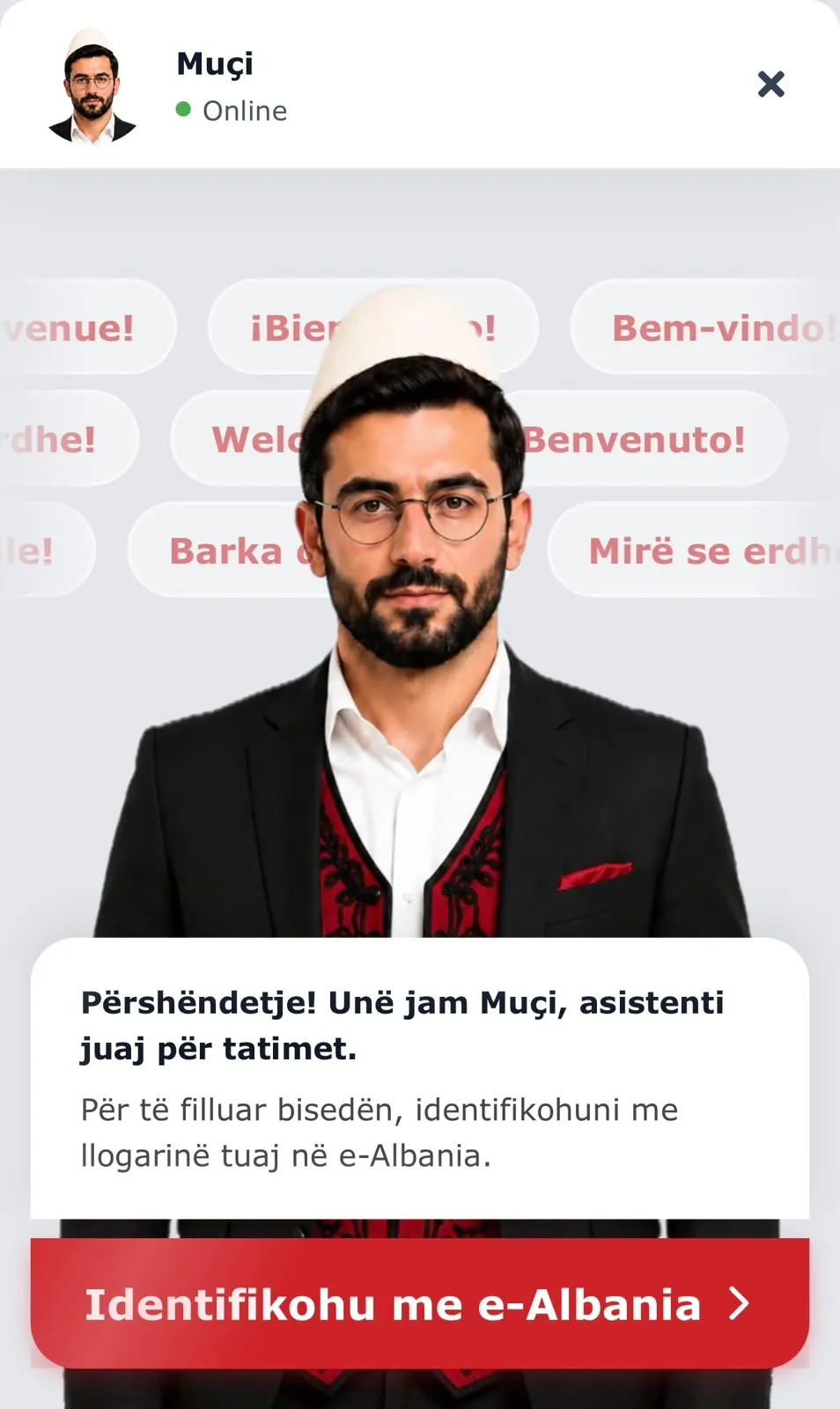
The Tax Administration has made available a virtual assistant called “Muçi,” which aims to facilitate communication with taxpayers and respond to businesses’ questions and concerns regarding tax obligations and procedures. To use the service, citizens and business representatives must first log in through their account on e-Albania.
The virtual assistant is introduced through an online communication interface, where users are welcomed by a digital character called “Muçi,” dressed in elements of traditional Albanian costume. His introductory message is: “Hello! I am Muçi, your tax assistant.”
Through this solution, the aim is for businesses to have a more direct communication channel with the administration, especially regarding issues related to the implementation of tax legislation, administrative procedures, and the obligations they must fulfill.
In practice, businesses often face uncertainties regarding periodic declarations, tax payments, electronic invoicing, registration or modification of activity data, as well as the interpretation of various fiscal provisions.
A virtual assistant can serve as a first point of guidance for these issues, reducing the need for repeated communications with the administration or for physical presence at its structures.
However, it remains to be seen how many of these issues can be handled directly by “Muçi” and in which cases taxpayers will need to continue communicating with administrative employees.
An important element of the service is mandatory identification through the e-Albania platform. Unlike a regular information page, where questions can be asked without identification, using this assistant requires logging into the user’s personal account.
This creates the possibility of communication linked to the taxpayer’s electronic identity, but from the published interface it is not clear whether the assistant has access to the individual tax data of the business or only provides general informational answers.
The digitalization of communication with taxpayers takes on special importance at a time when businesses face frequent legal and procedural changes. Discussions on the 2027 Fiscal Package, proposed changes in profit tax, VAT, and tax procedures are expected to increase the need for clarifications from the administration.
In this context, a virtual assistant that provides quick, accurate, and updated responses can especially help small businesses, which do not always have dedicated capacities to track fiscal changes.
On the other hand, the main challenge remains the quality of information. Responses on tax matters have direct financial and legal consequences, so it is important that the information provided by the assistant complies with the applicable legislation and official guidelines. /ekofin.al
