


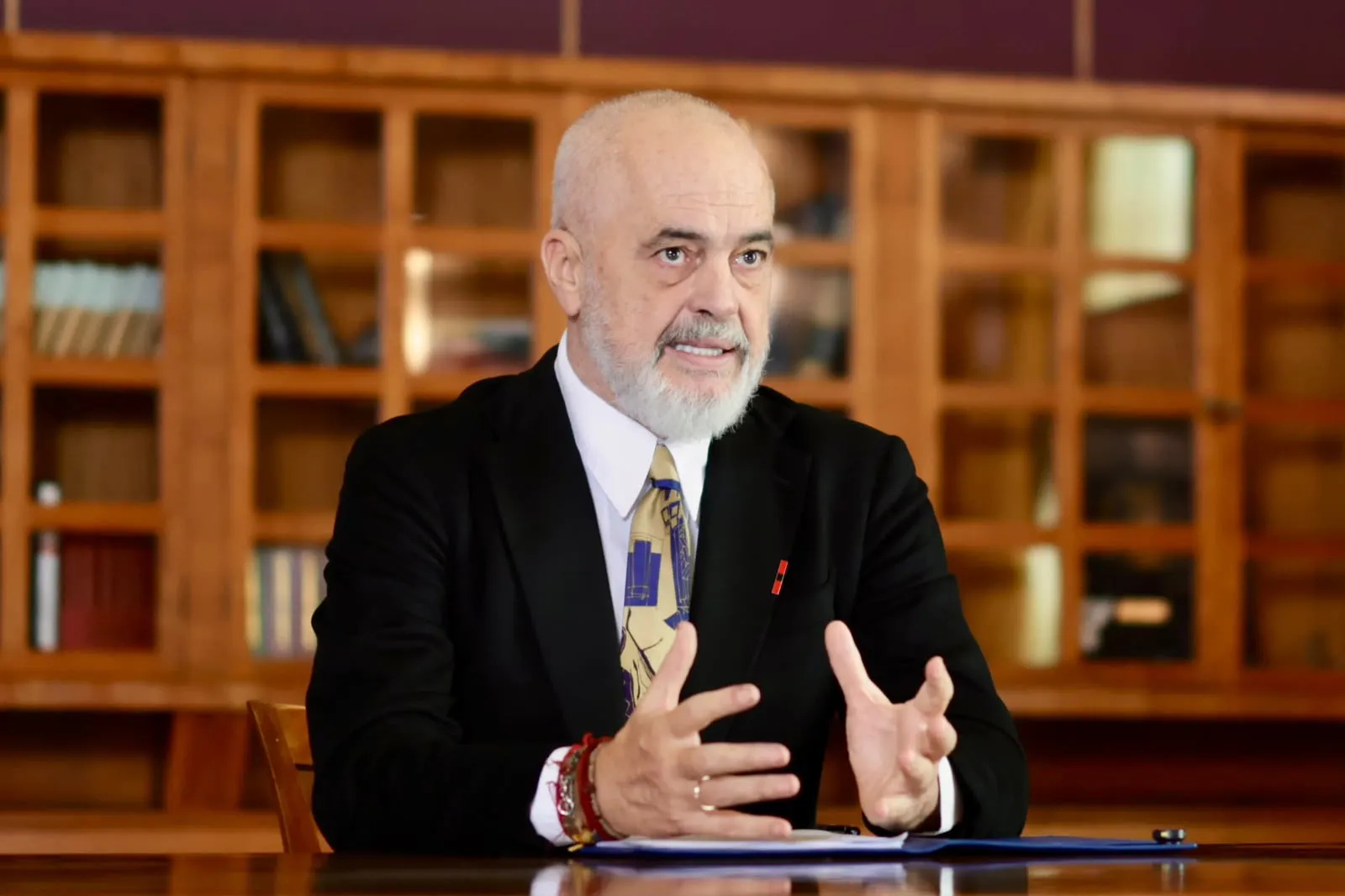
Prime Minister Edi Rama today presented the new public administration reform, called the “Merit Scale,” explaining how it will function and the changes it aims to bring to the state administration system.
During his speech, Rama focused on the three main pillars of the reform: entry into the administration through national testing, career advancement based on merit, and accountability in the leadership of institutions. The head of government also spoke about the evaluation process of leaders and the resignations of some of them from the positions they held a few days ago.
“With the Merit Scale, we are entering an element that affects everyone else: the people in the administration and the way this human capital of the Republic of Albania is managed and evaluated.
When we were entering this process, I always said, ‘OK, we are postponing and these negotiation directions will open, but then how will we manage when we sit at the table?’, because I was concerned about the level of preparation and discipline required by such a process.
Today, it is confirmed step by step by Brussels and European partners that our administration has, fortunately, people who know in detail very complex fields, who enjoy respect and are dedicated with their professional lives in service of the Republic of Albania. I am speaking about the hundreds of people who exist in Albania and whom we have the duty to know and appreciate with much greater care.
An employee can work diligently for years on end and still not have the fortune to advance in their career because they might have a manager who does not value their worth. And this is unfair.
This also becomes unfair to the citizens served, because it creates numbness and demotivation within the organization of the administration, destroying that level of merit which we will place at the center of our attention and which will be the priority of the new ministry.
A better salary and better working conditions do not solve the fundamental problem, merit. We will not leave the difference in the hands of one leader or another, but will be made systematically.
Here, the Merit Scale takes on fundamental importance. First, entry into the administration through the national test for proof of knowledge. This test will be conducted in cooperation with the Center for Educational Services, which is adopting the Cambridge exam model. Those who pass it successfully receive a certificate for four years and continue the competition.
Secondly, career advancement. There are many complaints about meritocracy, but it should not only be the requirements the state places on civil servants, but also the guarantee the state gives them, affirming that merit is recognized.
Thirdly, responsibility for the leadership of institutions.
Ten days ago, hundreds of leaders underwent a process to evaluate their work results. This is not a race to see how many leaders leave or to change names, removing Coli and bringing in Loli. It is a demand to see where the work has faltered and where it has produced worse results for the state. Where problems recur, there must be consequences, without compromising capacities and the negotiation process with the EU,” Rama said.
