


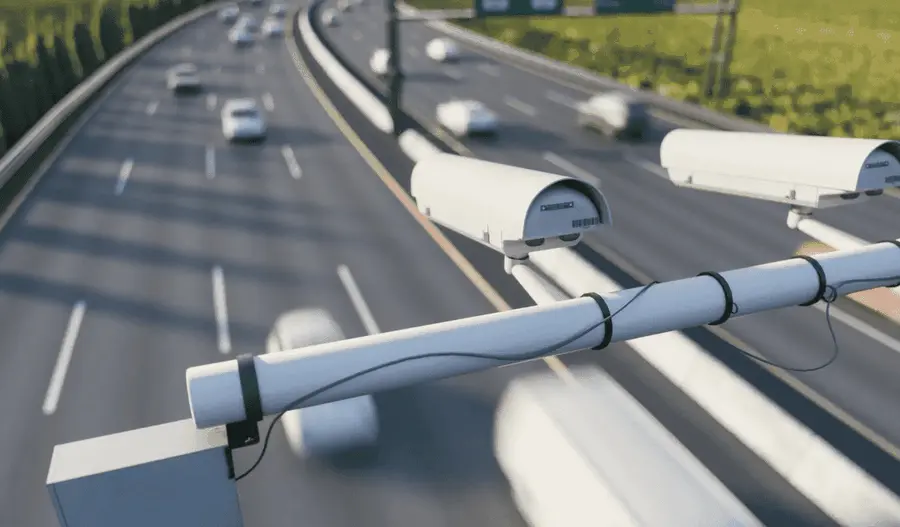
About 200 kilometers of roads in Albania will be monitored by new intelligent systems. The State Police has started training officers who will work at the Traffic Monitoring Center, and for this new function, a salary increase is also planned, which could reach up to 1500 euros.
From January 1st, road traffic control in Albania is expected to enter a new phase. Smart radars and advanced surveillance equipment will be activated on the country’s main roads, aiming to identify and document violations by vehicle drivers.
After installing equipment on some of the roads with the highest traffic flow, work is now underway to prepare the structures that will enable the system’s operation. Sources report that training has begun for a group of State Police officers who will monitor and analyze the information obtained from the radars through the Traffic Monitoring Center.
Officers will be engaged in a new work model, where road violations will be detected through technology, without the need for every check to be carried out by patrols in the field. From the operational center premises, they will be able to monitor vehicle movements in real time and identify violations recorded by intelligent systems.
In addition to the change in the control method, the project is also accompanied by a review of the financial treatment of the personnel who will work in this structure. According to the information obtained, salaries for employees engaged in this new role are expected to be revised, reaching up to 1800 euros.
How will the smart radars work?
The new system will rely on advanced land, sea, and air surveillance technologies, which will be combined with monitoring equipment installed either permanently or movable.
The radars will record and transmit detailed data about identified targets, including position, direction of movement, speed, time, and dimensions.
At the same time, the cameras will record the movement of vehicles through photos and videos, creating a data archive that will serve to document traffic rule violations.
Part of the integrated technology in this system will also include active-range cameras, sensors, as well as devices operating via radio frequencies.
The first 14 routes have been revealed: Roads to be monitored by intelligent radars
According to the information obtained, the first phase of the project will include 14 road segments, which together stretch over a length of about 200 kilometers.
The list of selected routes includes some of the most important transport corridors connecting Tirana with Durrës, Elbasan, Fier, and Vlorë. Monitoring will also extend to roads and connecting segments in the areas of Kavajë, Rrogozhinë, and Lushnjë.
Tirana–Elbasan – 26.4 km: From the TEG area to Bradashesh.
Durrës–Ring Beach – 5.9 km: From the Shkozet Overpass to Plepa.
Durrës–Kavajë – 9.81 km: Rrogozhinë Highway, from Plepat to Kavajë North.
Kavaja Ring Road – 7.89 km: From the northern part to the southern part of the city.
Kavajë–Rrogozhinë–Lushnjë – 13.9 km: From Rrogozhinë, in the area of Corridor VIII, to the northern part of Lushnjë.
Lushnja Ring Road – 4.62 km: From the northern part to the southern part of the city.
Lushnjë–Fier – 20 km: From the southern part of Lushnjë to Mbrostar.
Fier Ring Road – 21.5 km: From Mbrostar to Levan.
Fier–Vlorë – 24 km: From Levani to the Trans-Balkan road in Vlorë.
Vorë–Ahmetaq – 6.52 km: From Vorë to the intersection with Ahmetaq road.
Qafë-Kashar–Rinas–Ahmetaq – 9.59 km: The segment that includes the Qafë-Kashar overpass and the connection to the Ahmetaqi road intersection.
Intersections and connecting ramps – 5 km: Other connecting segments and ramps on the routes included in the project.
Speed in focus, but monitoring will also identify other violations
The activation of intelligent radars is expected to bring a significant change in the way the Traffic Police monitor and document violations. The new system will enable monitoring from the operational center, reducing dependence on traditional patrol controls on the streets.
Through technology, vehicle movements will be recorded and analyzed in real time, while the collected data will be used to identify detected violations.
About 200 kilometers included in the first phase will serve as a starting point for a broader project aimed at gradually expanding intelligent monitoring to other road axes in Albania.
Thus, from January 1st, vehicle drivers are expected to face a new reality on the roads: control will no longer rely solely on physical patrols, but also on a technological network that will monitor their movements from the operations center. A2 Television
