


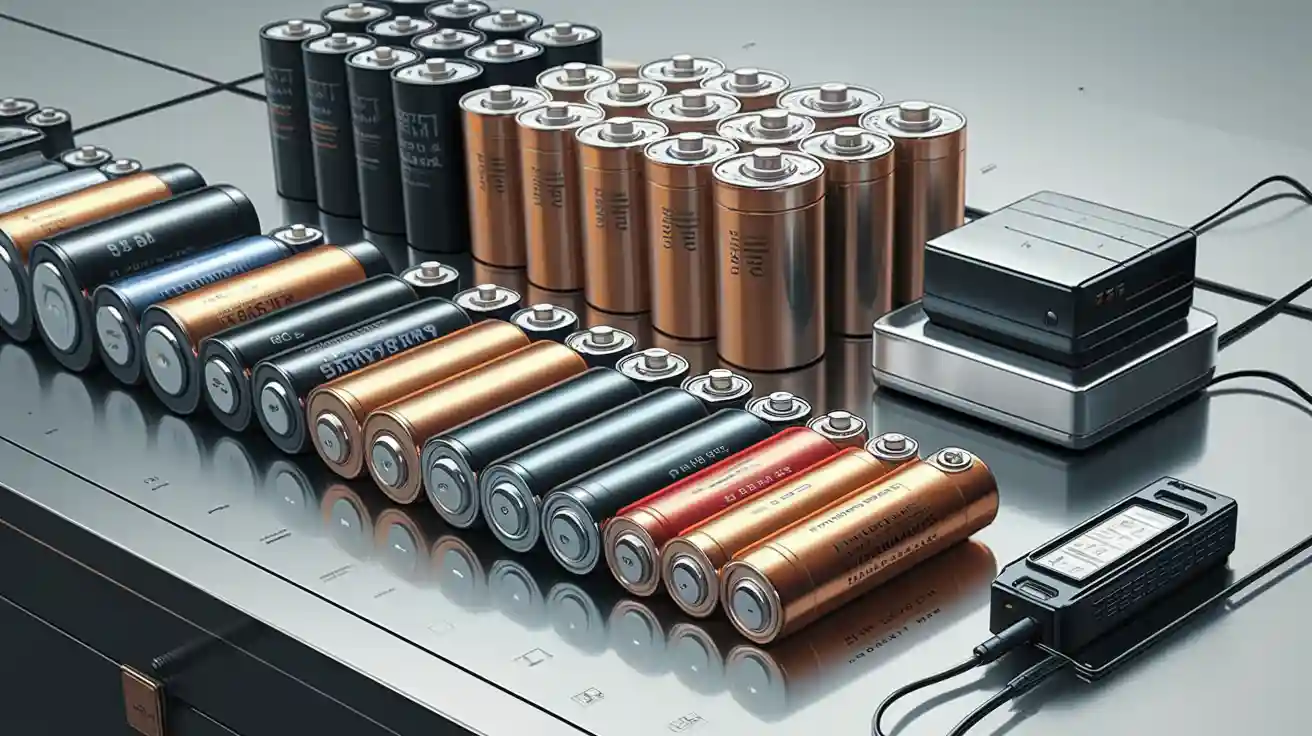
New rules for batteries and their waste, from production and import, placing on the market, use, to collection and recycling, are foreseen in a new government draft decision. The initiative sets obligations for producers, importers, and distributors, as well as creates an integrated system for battery management throughout their entire life cycle, in accordance with European Union standards.
The draft decision stipulates that only batteries that meet the requirements for safety, durability, performance, labeling, and consumer information may be placed on the market. Additionally, restrictions are imposed on the use of hazardous substances and obligations for declaring the carbon footprint and the content of recycled materials.
One of the main innovations is the digital battery passport, which will enable its identification and traceability through a unique identifier and QR code. The system will contain data on the battery’s characteristics, performance, and durability, facilitating control and transparency throughout the supply chain.
Another important change concerns the expanded responsibility of the producer. Manufacturers and importers will be required to register and assume financial and organizational responsibilities for the collection and management of batteries once they become waste. This will be done individually or through extended producer responsibility organizations, which will finance the operation of the system.
The draft decision also foresees the creation of a national network with around 5,000 collection points for portable batteries, as well as specific targets for the collection, treatment, recycling, and recovery of materials. In this way, the aim is to avoid disposing of batteries in regular waste and their disposal in landfills, encouraging reuse and the return of materials to the economic cycle.
The new rules will cover five categories of batteries: portable batteries, SLI batteries, mainly used in vehicles, industrial batteries, light transport vehicle batteries (LMT), and electric vehicle batteries (EV). In addition to waste management, the draft decision also sets obligations for due diligence in the supply chain, aiming to identify and minimize environmental and social risks related to the extraction and processing of raw materials.
According to the accompanying report, in 2026 it is estimated that around 7,423 tons of batteries will have been placed in the Albanian market, while by 2035 this amount is expected to reach 10,292 tons. For the creation of the new infrastructure, initial investments ranging from 250,000 to 350,000 euros are planned for the installation of collection points, as well as 130,000 to 162,500 euros for collection and transport vehicles.
The operating costs of the system will be mainly covered by producers and importers through extended producer responsibility schemes, without providing direct funding from the state budget for collection, treatment, and recycling activities.
The draft decision consists of 11 chapters, 89 articles, and 14 annexes, and also foresees strengthening market surveillance, controls, and administrative measures against operators who do not fulfill their obligations. Upon its entry into force, Council of Ministers Decision no. 866, dated December 4, 2012, regarding batteries and accumulators and their waste, will be repealed.
Essentially, the innovation of this draft act is the shift from a system focused on battery waste management to a comprehensive model that assigns responsibility for every stage of their life, including production, traceability, use, reuse, and recycling./ekofin.al
