


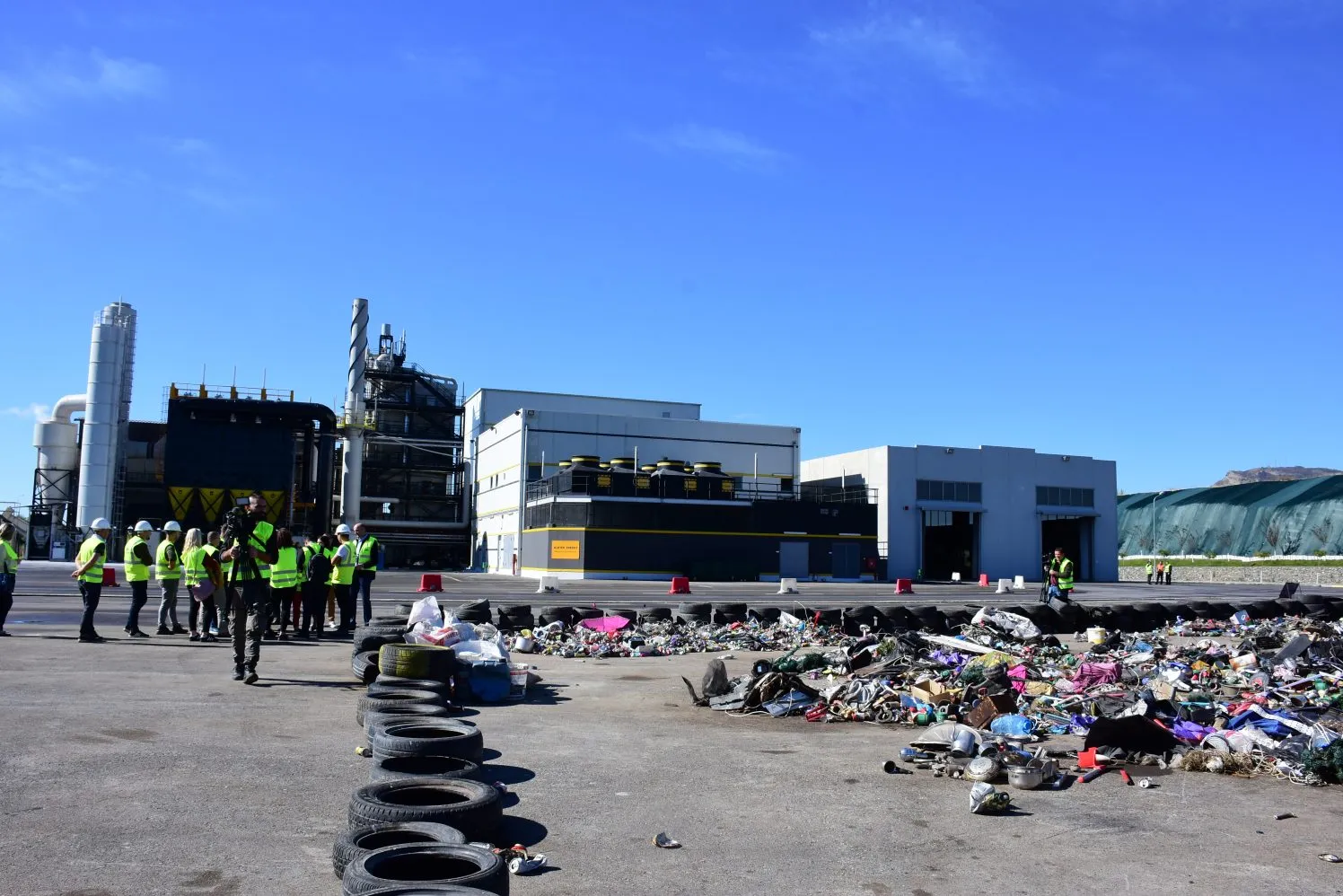
The Elbasan incinerator, one of the most debated investments in the waste management sector in Albania, will no longer be part of the solution for the treatment of urban waste in the district. After many years of funding, operational problems, and the transfer of administration to the public company ECO-ELB, the 2027 draft budget foresees that the waste from the municipalities of Elbasan County will be transported to the waste management zone in Shkodër.
This development raises serious questions about the fate of the investment made in Elbasan, the effectiveness of public funds spent over the years, and the new costs that will have to be borne for transporting waste over considerable distances.
In the 2027 draft budget documents, consulted by ekofin.al, which define the method of financing urban waste management by local self-government units, it is explicitly foreseen that the municipalities of Librazhd, Elbasan, Rrogozhinë, Peqin, Cërrik, Belsh, Prrenjas, and Gramsh will be financed for the transportation of urban waste to the Shkodër waste management zone.

This means that, at least in next year’s financial planning, the Elbasan plant does not appear as the destination for waste treatment in these municipalities.
The document does not provide an explanation for the technical condition of the incinerator or the reasons for not designating it as a destination, but the redirection of funds towards Shkodra constitutes an important indicator of the change in the waste management scheme.
From a multi-million euro investment to the transfer of waste to Shkodër
The Elbasan incinerator was promoted as an investment that would provide a long-term solution for urban waste treatment by replacing uncontrolled storage and burning with an industrial processing process.
For years, the project received public funding, after which the management of the plant was transferred to the company ECO-ELB, established to manage it.
However, the operation of the incinerator has been accompanied by ongoing problems, while matters related to the management of the plant have also taken on investigative dimensions.
The current administrator is subject to SPAK proceedings, a circumstance that increases the need for transparency regarding the management of the plant. The specific procedural status and any possible charges must be distinguished from criminal liability, which is determined solely by the court.
Now, the 2027 draft budget document highlights another problem: after continuous investment and financing, Elbasan’s waste is planned to be transported to another district.
Shkodra will also receive waste from Elbasan and Fier
What stands out in Annex 6 of the budget documents is that Shkodra is not intended to serve only the northern municipalities.
Besides Malësia e Madhe, Shkodër, Vau i Dejës, Pukë, Fushë Arrëz, Lezhë, and Kurbin, the Shkodër waste management zone also includes eight municipalities from the Elbasan group, as well as six other municipalities: Fier, Lushnjë, Roskovec, Patos, Divjakë, and Mallakastër.
In total, the document foresees financing the transport of waste to the Shkodër area for 21 municipalities, from the north, central Albania, and the south of the country.
This concentration raises questions about the reception capacities of the waste management infrastructure in Shkodër, its lifespan, and its ability to handle additional flows from municipalities located hundreds of kilometers away.
If the scheme is implemented in this way, transporting waste from Elbasan and Fier to Shkodër could lead to higher costs for fuel, vehicles, maintenance, and personnel, as well as additional environmental impact from the circulation of heavy vehicles.
The annex stipulates that the additional funds are provided as an unconditional sectoral transfer, taking into account the annual amounts of waste and additional transportation costs. Municipalities will also need to add funds from their revenues.
Elbasan, from the incinerator to open-air waste burning
The situation becomes even more concerning due to the occasional reports of open-air waste burning in Elbasan.
Although the city has a plant built specifically for waste treatment, episodes of burning waste outside a controlled industrial process have been reported.
These incidents constitute a serious environmental concern, as uncontrolled burning of waste can release fine particles, pollutant gases, and substances hazardous to residents’ health.
The paradox lies in the fact that a city where investment was made in building a modern waste treatment plant faces reports of open burning, while for 2027 funding is planned for waste transport towards Shkodër.
The administrator of ECO-ELB was arrested by SPAK on suspicions of corruption
To the financial and technical problems of the plant, a criminal case involving the administrator of the public company ECO-ELB, Leli Kaja, has also been added.
On October 5, 2026, SPAK announced his arrest in flagrante delicto, on suspicion of passive corruption. According to the Special Prosecution, he is suspected of having requested and received 400,000 lek from the administrator of an economic operator in exchange for failing to perform his official duties. Investigations continue, and criminal responsibility remains to be determined by the court. 
Meanwhile, the documentation published by the Municipality of Elbasan itself admits that the incineration center is not fully operational.
Who will pay the new bill?
Beyond the fate of the incinerator, the 2027 draft budget opens a new discussion about the costs of waste management.
After funds have been spent on the construction and management of the Elbasan plant, additional funds are now planned for transporting the waste to Shkodër.
It remains unclear whether this is a temporary solution or a long-term change in the waste treatment model. Also, the additional capacities to be made available in Shkodër and the total transportation costs have not been clarified.
Another question concerns the fate of the existing infrastructure in Elbasan: will the incinerator be rehabilitated, will the landfill continue to be used, or will the plant remain an investment that does not fulfill the purpose for which it was built?
The answers are important not only for the transparency of public spending but also for the protection of the environment and citizens’ health. /ekofin.al
