


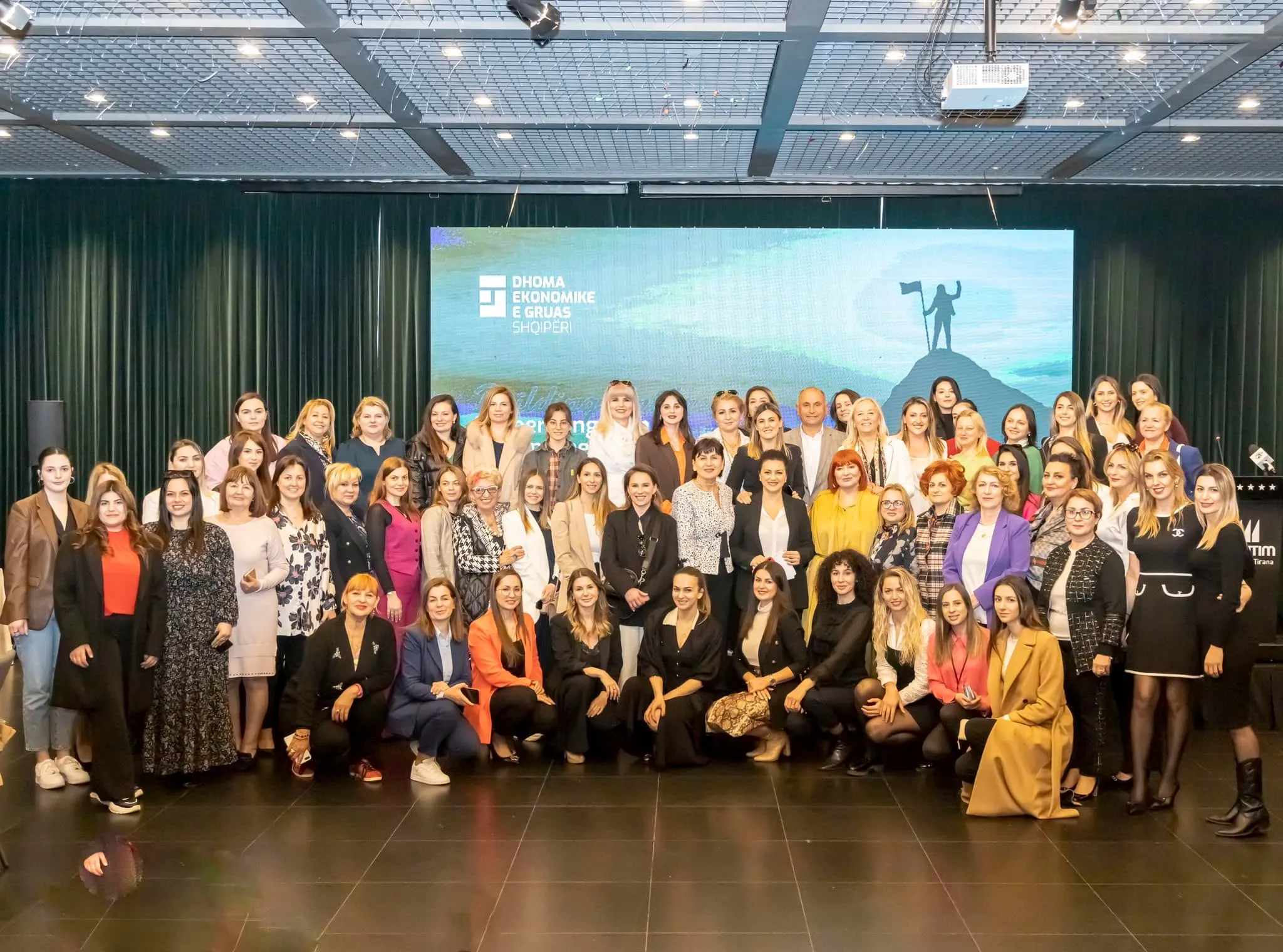
The Women’s Economic Chamber in Albania (WECA) has expressed concern about the proposed changes in the 2027 Fiscal Package, warning that the increase in the tax burden and the lowering of the VAT registration threshold could negatively affect micro, small, and medium enterprises, especially businesses led by women and girls.
In a statement to the media, the WECA calls for fiscal policy to support the development of entrepreneurship and not to create new obstacles to investment, formalization, and the expansion of economic activity.
The Women’s Economic Chamber emphasizes that it supports reforms aimed at formalizing the economy, reducing bureaucracy, and creating a stable economic environment. However, according to it, changes that directly affect the costs, liquidity, and investment capacity of businesses should be preceded by real consultations with the business community and by thorough economic impact analyses.
Lowering the VAT threshold, a concern for small businesses
One of WECA’s main concerns relates to the proposal to lower the mandatory VAT registration threshold from 10 million to 5 million lek in annual turnover.
According to the Women’s Economic Chamber, this change could include a larger number of small businesses in the VAT scheme, creating new obligations for reporting, accounting, and tax administration.
The organization argues that a significant portion of women entering entrepreneurship start their activities as microbusinesses or small businesses. For this reason, the increase in administrative and fiscal costs can directly affect their opportunities to grow.
WECA calls for a revision of the proposal to halve the VAT threshold or, alternatively, to establish a transitional period and relief mechanisms for entities affected by the change.
According to her, the transition from microbusiness to a more developed and competitive enterprise should not be accompanied by new administrative and financial barriers.
The increase in profit tax and dividends may limit investments
The Women’s Economic Chamber also expresses reservations about proposals that foresee increasing the profit tax from 15% to 17% and the dividend tax from 8% to 15%.
The statement emphasizes that for small and medium enterprises, profit often constitutes the main source of financing for expanding activity, investments in technology, and employment.
For this reason, according to WECA, the increase in corporate income tax and dividends requires a careful assessment of the impact it may have on businesses’ ability to reinvest the capital they have created.
The Women’s Economic Chamber demands that fiscal policies create incentives for women entrepreneurs to invest and expand their activities while preserving the necessary capital for development.
The increase of VAT from 20% to 21% is also opposed.
Another point of the statement is the opposition to the proposed increase of the standard VAT rate from 20% to 21%.
WECA estimates that this measure would increase the burden on consumers, affecting their purchasing power and creating additional pressure on businesses.
According to the organization, the effects may be especially felt in micro and small enterprises led by women and girls, which have more limited financial capacity to cope with changes in costs and market demand.
Tourism and agritourism require caution regarding the increase of VAT
The Women’s Economic Chamber also addresses the proposed increase of VAT in the tourism sector from 6% to 10%.
According to WECA, tourism, agrotourism, handicrafts, local production, and services are among the sectors where many entrepreneurial initiatives by Albanian women and families take place.
The organization demands that any change in the fiscal burden on these activities be analyzed in relation to the competitiveness, investments, and financial sustainability of businesses.
Special attention is required for small tourism structures, family businesses, and local enterprises, which may have fewer opportunities to cope with the increase in fiscal obligations.
The six demands of the Women’s Economic Chamber
In its response, WECA presents six concrete demands to the institutions responsible for drafting and approving the 2027 Fiscal Package.
First, it requires direct consultation with representative business and women’s entrepreneurship organizations before the final approval of the changes.
Second, it requires conducting a special analysis on the impact that the 2027 Fiscal Package will have on women entrepreneurs and the businesses they lead.
The third request concerns the revision of the VAT threshold reduction from 10 to 5 million lek, or the establishment of a transitional period and relief mechanisms for micro and small businesses.
Fourth, WECA seeks to assess the impact of increasing corporate income tax and dividends on the ability of small and medium enterprises to reinvest and expand.
The fifth demand concerns analyzing the consequences of the VAT increase on tourism and agrotourism, especially for small structures, families, and local enterprises.
Finally, the organization proposes fiscal measures that encourage formalization, investment, and the growth of women-led businesses, avoiding the creation of new barriers for enterprises in the early stages of development.
WECA: The voice of women entrepreneurs must be part of decision-making
At the conclusion of the statement, the Women’s Economic Chamber emphasizes that fiscal policies are not simply a matter of tax rates and percentages, but directly influence women’s economic decision-making.
According to the organization, these policies influence a woman’s decision to start a business, to employ, to invest, to formalize the activity, or to expand it.
“Albania needs more women and girls who undertake economic initiatives, create businesses, and create jobs. Fiscal policy should support this process and not make the path to entrepreneurship more difficult,” the WECA statement emphasizes. /ekofin.al
