


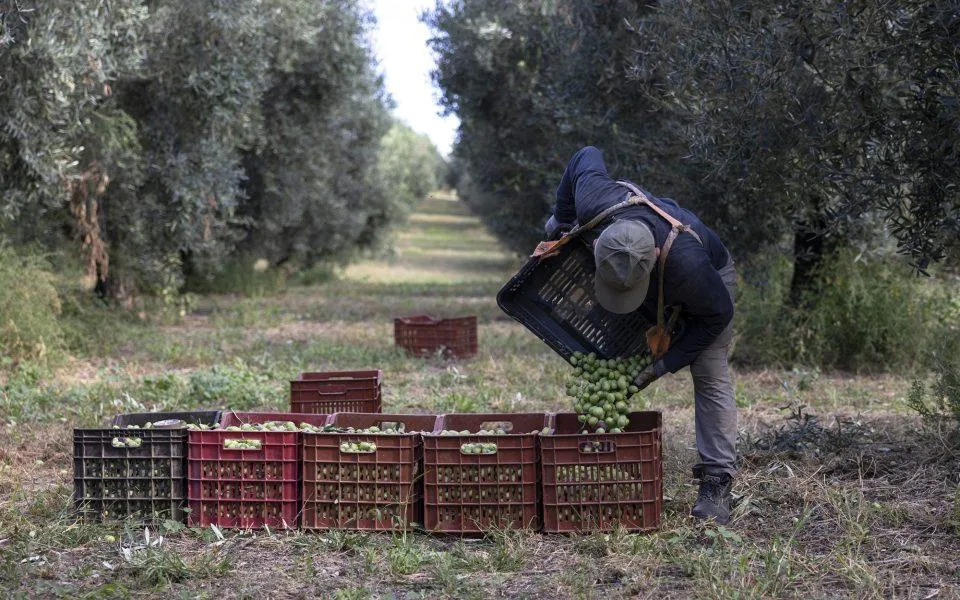
The olive harvest season in Greece has revived the debate about labor costs in agriculture, as a Greek farmer has publicly complained about the wages and demands of seasonal workers. According to him, in addition to the daily wage of 60 euros, workers also demand breakfast with coffee and croissants, as well as lunch with chicken meat and beer.
The complaint comes at a time when thousands of seasonal workers are engaged in olive picking in Greece, including many Albanians who traditionally travel to the neighboring country during the autumn and winter months to work in agriculture.
Farmer Kostas Varthakouris, from the Pyrgos area in the Ellis region, has raised concerns about the rising costs of olive harvesting and the demands that, according to him, olive grove owners must meet to secure the workforce.
He claims that the workers are asking for 60 euros per day, while for breakfast they expect to get croissants and Freddo coffee, one of the most popular drinks in Greece. For lunch, according to the farmer, the demands include chicken meat and beer.
The declaration has sparked discussions about working conditions in agriculture and the difficulties farmers face in securing workers during the harvest season.
Olive harvesting is one of the agricultural activities that traditionally attracts workers from Albania to Greece.
Every year, during the autumn and winter period, many Albanians travel to rural Greek areas to engage in olive harvesting, especially in regions where their cultivation is one of the main economic activities.
For some Albanian families, seasonal work in Greek olive groves represents an opportunity to secure additional income over several weeks or months.
For Greek olive producers, labor costs are only one of the expenses that affect the final profit.
In addition to salaries, farmers must cover expenses for fuel, transportation, equipment maintenance, and organizing the harvesting process.
The situation becomes more difficult for small producers, who have limited olive grove areas and depend on the selling prices of olives or olive oil to cover costs.
Another problem remains securing the workforce in a timely manner. Harvesting must be carried out within a certain period, which increases the need for workers and can affect wage negotiations.
