


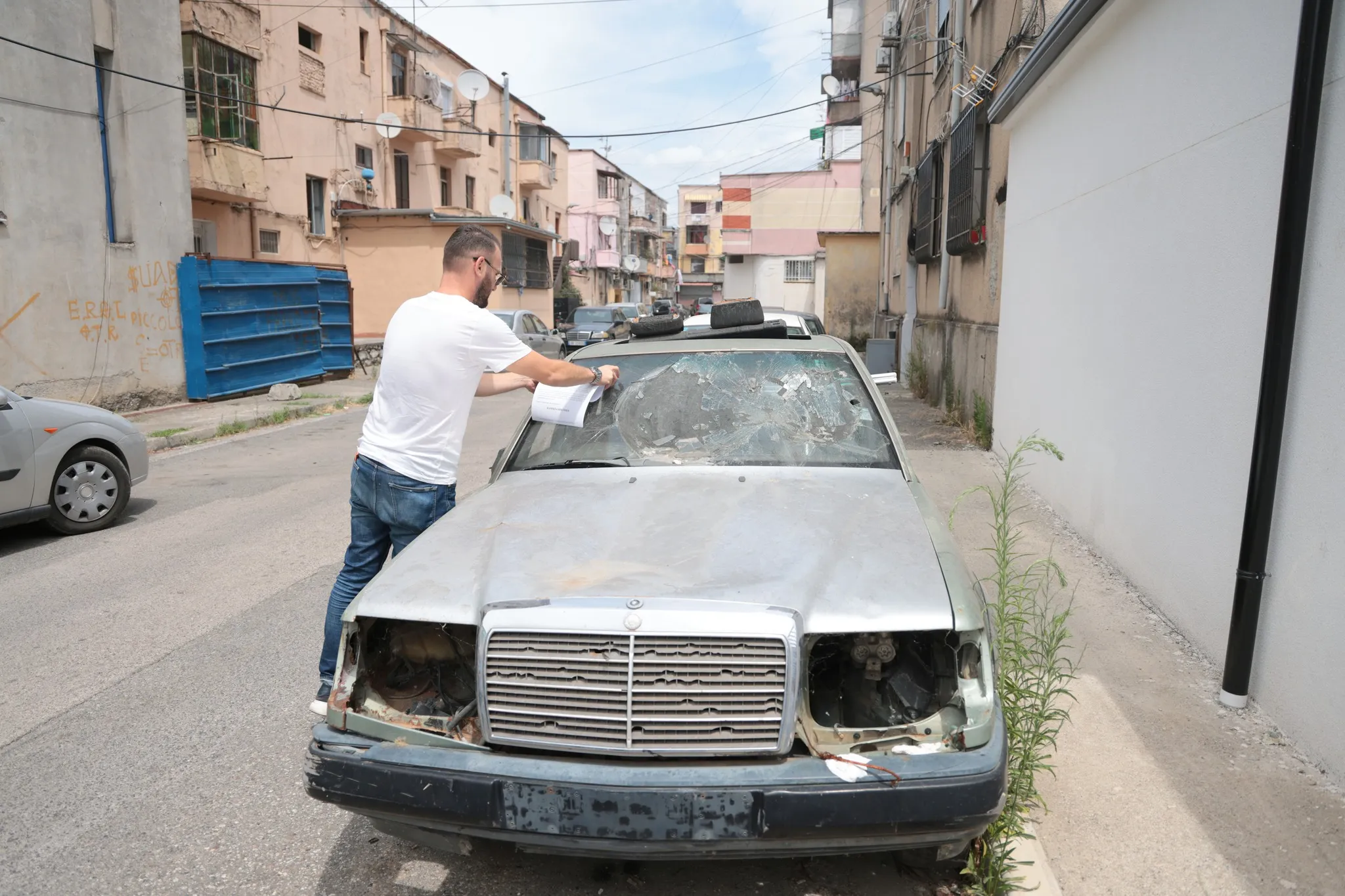
Abandoned vehicles on neighborhood roads, public spaces, or other urban areas will be subject to identification and removal procedures by local authorities. A new government draft decision aims to establish clearer rules for the management of vehicles that are out of use, defining the responsibilities of municipalities, the State Police, and authorized operators for their handling.
According to the draft decision prepared by the Ministry of Environment and the Ministry of Infrastructure and Energy, municipalities, in cooperation with the State Police structures responsible for road traffic, will take measures to identify and remove abandoned vehicles within the territory they administer.
The initiative aims to address an issue present in urban spaces, where vehicles left out of use can occupy parking spaces and public areas for long periods, and in certain cases also constitute a source of pollution.
But the removal of the vehicles will not automatically mean sending them for destruction.
The draft decision stipulates that before handing over an abandoned vehicle for processing, the structure that carried out the removal must verify, in cooperation with the responsible institutions, the vehicle’s identification number, license plate, ownership, and registration data.
Additionally, the legal and administrative status of the vehicle will be checked to determine whether it is stolen, wanted, seized, confiscated, or burdened.
After identification, authorities must notify the vehicle owner or owner and ensure its safekeeping according to the procedures and deadlines set out in road traffic legislation.
Only after completing these procedures can the vehicle be handed over to an authorized operator for treatment.
For vehicles whose owners cannot be identified, as well as for seized, confiscated, wanted, or loaded vehicles, handover for handling will require a decision from the competent authority.
Another innovation of the draft decision relates to the costs of delivering vehicles that have reached the end of their life.
According to the proposed rules, owners will be able to hand over vehicles for treatment at no cost, even in cases where the vehicle no longer has a market value or its value is negative.
However, exceptions are foreseen. Authorized operators will have the right to charge if the vehicle is missing essential parts, especially the engine or bodywork, or if waste not belonging to the vehicle has been deposited inside.
The costs of the collection system will be fully or partially covered by producers, including professional importers, according to the legislation on extended producer liability.
The draft decision also establishes a mechanism to guarantee the traceability of vehicles that permanently leave circulation.
Every vehicle handed over for treatment will be issued a destruction certificate issued by the authorized operator. This document will be a condition for the permanent deregistration of the vehicle from the road vehicle register.
The certificates will have a unique serial code issued by the National Environment Agency, while the data will be recorded in the institution’s electronic system.
In the case of abandoned vehicles leaving the authorities, the destruction certificate will be issued in the name of the authority handing over the vehicle for processing.
In addition to the removal of abandoned vehicles, the draft decision also sets standards for the recycling and recovery of their materials.
From January 1, 2028, operators will be required to ensure the reuse and recovery of at least 85% of the average weight of treated vehicles, while reuse and recycling must reach at least 80%.
From January 1, 2030, these targets will increase to 95% and 85%, respectively.
The rules also aim to prevent pollution from oils, fuels, batteries, brake fluids, and other hazardous substances contained in end-of-life vehicles.
Treatment and dismantling will be carried out only by operators equipped with environmental permits and the relevant licenses.
According to the accompanying report, some of the vehicles at the end of their life are currently abandoned in the environment, dismantled irregularly, or handled by entities that do not meet technical and environmental standards. /ekofin.al
