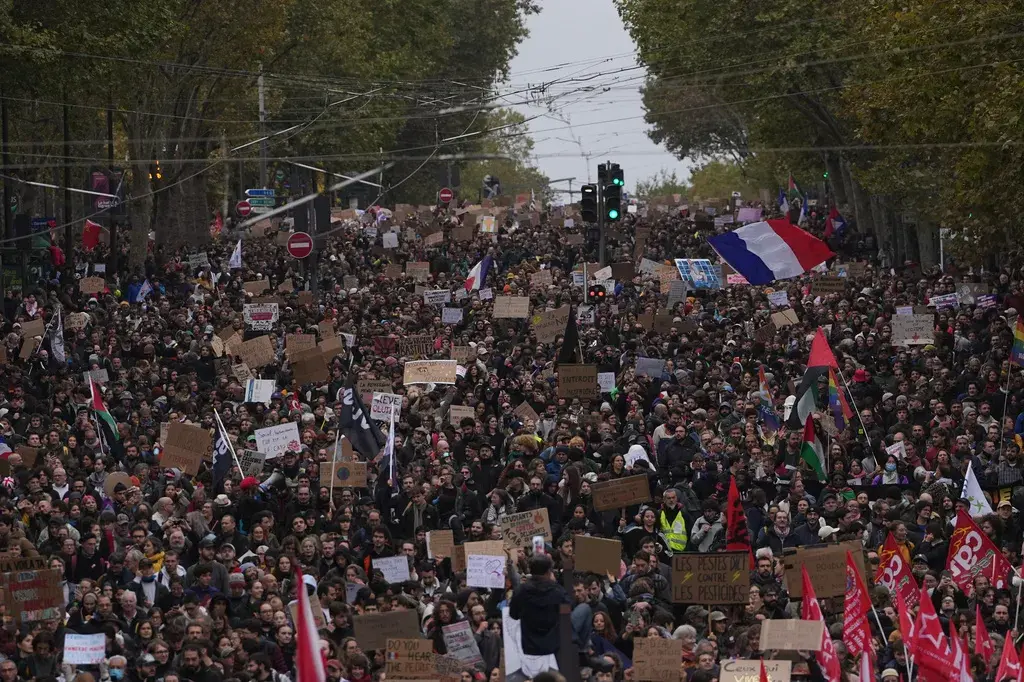
Europe experienced another day of protests and tensions. Thousands of citizens took to the streets of France against the rising cost of living and social inequality.
Although the demonstrations mostly began peacefully, clashes with police broke out in Paris and other cities by evening, despite increased security measures.
According to the French Ministry of the Interior, around 410,000 people across the country participated in the protests, while unions claim the number was around 800,000. In Paris alone, around 110,000 demonstrators marched, according to authorities, opposing the price increases and the policies of President Emmanuel Macron’s government.
To prevent a repeat of last weekend’s violence, authorities deployed around 70,000 police officers and gendarmes, 10,000 more than at the October 17 protest. In the capital, many shops were boarded, some museums and cultural institutions closed their doors, while more than 20 metro stations were not operating.
The situation changed after the march ended, when groups of masked youths threw stones and hard objects at the law enforcement forces. The police intervened with tear gas and water cannons to disperse the crowds. Clashes also spread to Marseille, where protesters erected barricades, burned trash bins, and attacked the police. According to authorities, two jewelers were robbed during the riots.
The number of arrests increased during the day. French Interior Minister Laurent Nuñez stated that over 1,000 people had been arrested across the country, while the numbers are expected to rise. Meanwhile, 1,000 people were injured. Authorities said the violence was more limited compared to last weekend, when several cities were engulfed in looting and vandalism.
Tensions were also recorded in Italy, where demonstrations took place for the second consecutive weekend. In Rome, the march ended without serious incidents, while in Turin there were brief clashes with the police. Protesters opposed the rising cost of living, war, and rearmament, while some even demanded Italy’s exit from NATO.
In Milan, authorities increased security measures following last week’s riots and looting. Police conducted checks and preliminary detentions, while security forces patrolled key areas of the city to prevent new incidents. Protests and clashes also spread to Belgium. In Brussels, police used tear gas and irritant spray against demonstrators demanding improved conditions in education and opposing government policies. Footage showed protesters running through the streets while law enforcement intervened to disperse crowds.
Thousands of protesters took to the streets of Lisbon again, opposing the deepening housing crisis in Portugal.
The demonstrators marched under a banner that read “General strike for housing,” while waving keys in the air. Portugal is facing one of the most severe housing crises in Europe.
Protesters in all countries unite in demands for better economic conditions, public services, and political change.