


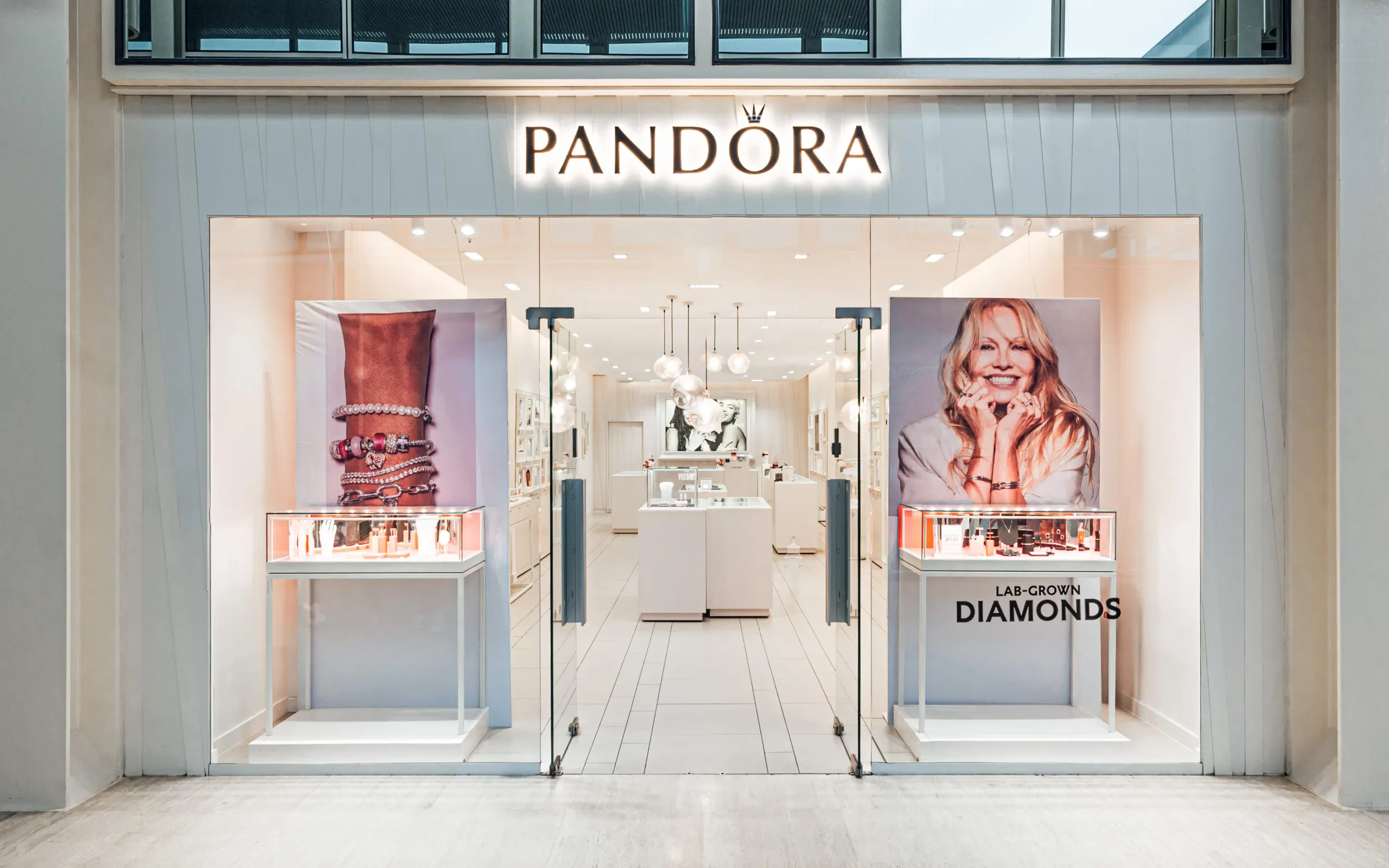
Pandora has opened in Vietnam what it describes as the largest factory in the world for producing precious jewelry, expanding its production capacities while simultaneously aiming to reduce its environmental impact.
The factory, located in Ho Chi Minh City, is expected to employ 7,000 people once it reaches full operational capacity.
It will produce up to 60 million pieces of jewelry per year, increasing the Danish company’s production capacity by 50%, according to the announcement of its inauguration.
This is Pandora’s fourth factory globally and the first outside Thailand.
“This gives us the flexibility to produce all our collections, the full range of products, using all our materials and manufacturing techniques,” stated Pandora’s CEO, Berta de Pablos-Barbier.
The Danish jewelry manufacturer sold 112 million products in 2025, equivalent to more than three pieces of jewelry every second. The company describes itself as the largest jewelry brand in the world.
Increased production, reduction of emissions
Pandora has invested 150 million dollars (132 million euros) in the Vietnamese factory, which, according to the company, will use only electricity generated from renewable sources.
Also, since 2024, the company has switched to using 100% recycled gold and silver in jewelry production.
While expanding production capacities, de Pablos-Barbier stated that Pandora will continue to grow “steadily.”
According to experts, gold is especially suitable for continuous reuse.
“In many ways, it is an ideal material for the circular economy. It does not oxidize. That is why it is so valuable,” said Saleem H. Ali, lead researcher on critical minerals and the comprehensive energy transition at the United Nations University.
“We still have the ancient Egyptian gold in quite good condition,” he added.
However, using recycled metals requires energy. The refining process involves heating and separating metals from other materials to remove impurities.
Pandora’s ambition is to expand the use of electricity from renewable sources beyond its operations, including suppliers involved in jewelry production.
Challenges in a growing jewelry market
Jewelry sales, measured by the number of products, are projected to grow by 4.1% annually during the period 2025–2028, a rate about four times higher than that of clothing, according to The State of Fashion 2026 report published by McKinsey and The Business of Fashion.
Pandora’s rise, from a small jewelry store in Copenhagen founded in 1982, was based on production in Thailand, which began in 1989.
Its well-known decorative charm bracelet, launched in 2000, spurred the company’s international expansion before its listing on the Copenhagen Stock Exchange in 2010.
However, the growth of the jewelry market does not guarantee an easy path for Pandora.
In the August 2026 financial results, the company warned that U.S. tariffs on imports would continue to weigh on its profitability.
These tariffs affect sales to the United States, Pandora’s largest market, where inflation and economic uncertainty are also putting pressure on demand for the company’s jewelry.
Previous labor disputes have also raised questions about the working conditions in its factories.
The Danish investigative media Danwatch reported in 2020 that a labor court in Thailand had ruled in May 2019 that union activity had influenced the dismissal of several employees at Pandora’s factory in Bangkok.
Pandora stated that the job cuts had resulted from the restructuring and performance evaluation of employees.
As it expands its activities in Vietnam, it remains to be seen whether Pandora will manage to increase production while simultaneously reducing emissions and ensuring the protection of workers’ rights./Adapted from Euronews, ekofin.al
