


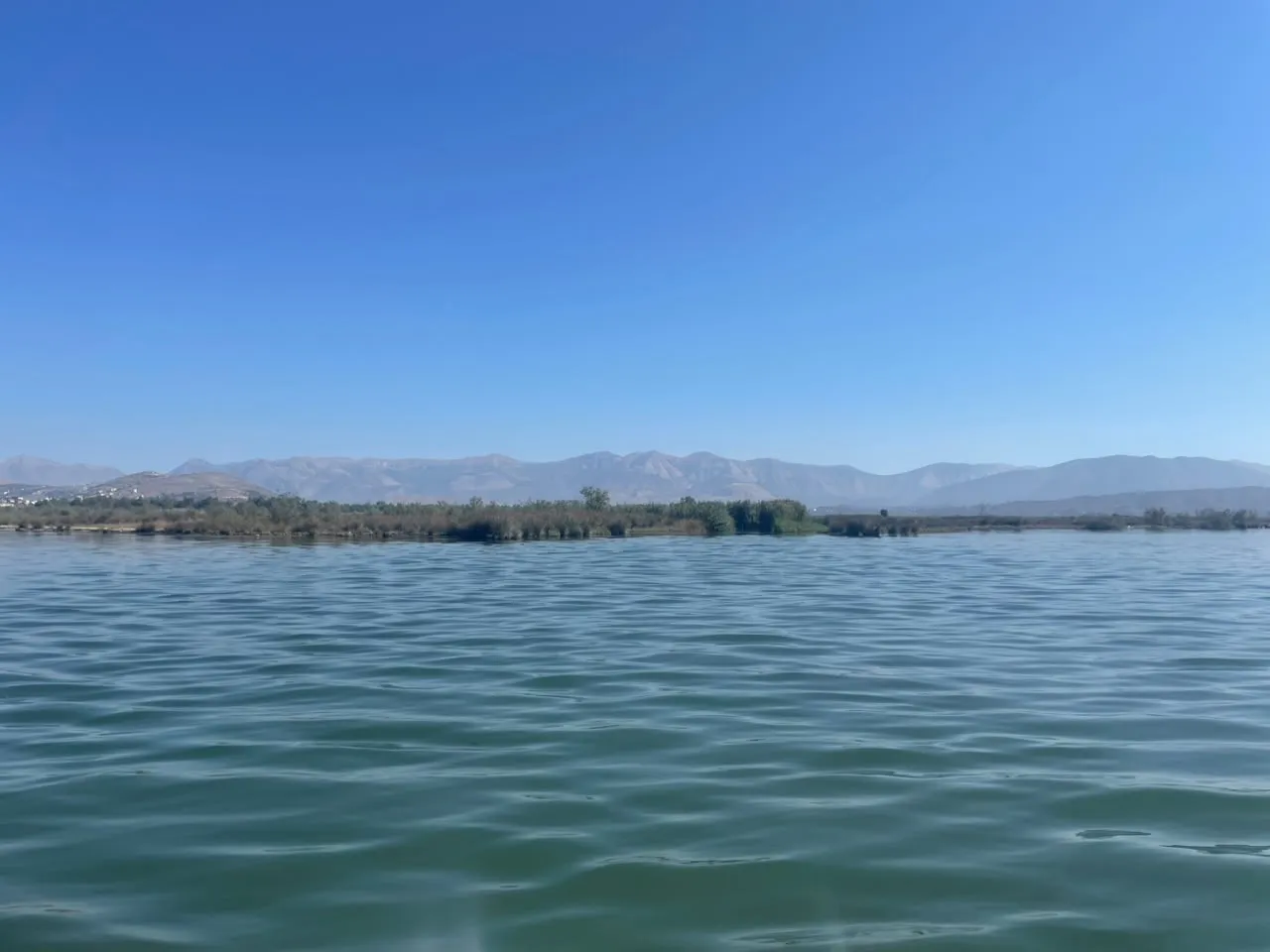
Coastal lagoons are among the most productive but also the most fragile ecosystems in the Mediterranean. In Albania, interventions over the past decades in rivers, wetlands, and flood-prone areas have changed the way important lagoons such as Karavasta, Narta, Patok, and Butrint exchange water with the interior of the territory and the sea. In conditions of ever-increasing temperatures, the preservation and restoration of these water connections is becoming increasingly important for their sustainability.
In a recently published analysis, expert Arian Gaçe argues that the Mediterranean lagoons need to survive by retaining water not only from the sea but also from the inland watersheds as well as from the continent. through the inflow of fresh water from rivers. These inflows affect water circulation, sediment transport, and the maintenance of suitable conditions for lagoon ecosystems. The detachment of rivers from lagoonsunder the conditions of small tides typical of the Mediterranean Sea can promote sediment accumulation in communication channels and worsen problems such as high temperatures, increased salinity, eutrophication, and oxygen deprivation.
Part of these changes in Albania is related to interventions carried out during the second half of the 20th century, when wetlands and coastal lowlands were transformed to expand agricultural land and control floods. Rivers were channeled, floodplains were isolated, and seasonal connections that once brought fresh water to wetlands were significantly reduced.
Climate change has not appeared today. The globe and living world have often gone through extreme climate changes to survive, but always paying a very high price. What makes today’s climate change concerning and sometimes alarming is the speed at which it is happening and the fact that today’s human society and its productive and economic system are extremely sensitive to environmental and climate instability
Mr. Arian Gaçe, an expert in the field of biological and environmental sciences, speaks to Klima Sot.
One of the clearest examples is the Butrint Lagoon. Historically, the Bistrica and Kalasa rivers brought fresh water into the lagoon system, while water circulated through wetlands before reaching the Ionian Sea via the Vivari Channel. This dynamic changed after interventions in the 1960s-1970s, when the Bistrica’s flow was diverted directly through the Çuka Canal towards the sea. Similar interventions in the surrounding watercourses further reduced the fresh water supply to the Butrint system.
Today, this situation becomes especially problematic during the summer months. High temperatures and limited circulation favor water stratification and a decrease in oxygen concentration in the deeper parts of the lake. The impacts are not limited only to biodiversity. Butrint is also an important area for mussel farming (Mytilus galloprovincialis), and extreme water temperatures and lack of oxygen create consequences for economic activities related to aquaculture.
One of the areas where global warming has been felt the most is the Mediterranean basin, where in the last 10 years there has been a significant increase in sea water temperatures accompanied by a significant reduction in rainfall. Lagoons, which are typically shallow water systems with slow water circulation, are quite sensitive to environmental stresses caused by high temperatures and lack of rainfall. For the above reasons, it is essential and urgent that the management practices of these ecosystems focus on optimizing water regimes, recognizing once and for all that the most important component in these ecosystems is WATER.
Under conditions of climate change and increasingly higher temperatures, the author proposes repairing and expanding the Bistrica water intake structure to controllably divert its flow into the lagoon. Colder and oxygen-rich water can help improve circulation, reduce thermal stress, and create more favorable conditions during critical summer periods.
However, such an intervention requires careful study and management. Among the proposed measures are classic ones like the maintenance of the Vivari Channel, as well as the improvement of the Bistrica diversion control system in the lake parallel to the development of hydrodynamic models that take into account inflows, temperature, salinity, dissolved oxygen, rainfall, and wind. The construction of these models is essential to optimize the quantity and the most suitable timing of the Bistrica inflows towards the lagoon.
The case of Butrint shows that the protection of lagoons is not only about preserving their surface but also about the functioning of natural processes that keep these ecosystems alive. In a warming Mediterranean, restoring connections between rivers, wetlands, and lagoons can be an important element of ecological restoration and adaptation to climate change, while simultaneously protecting biodiversity and the economic activities dependent on these ecosystems./KlimaSot
